Trending...
- Dr. Latorial Faison Appointed Poet Laureate of Virginia
- Home Service Partners Inc. Aims to Become One of New England's Top Five Solar Companies
- City of Boston Shares Final Voting Reminders in Preparation for the November 3 State Election
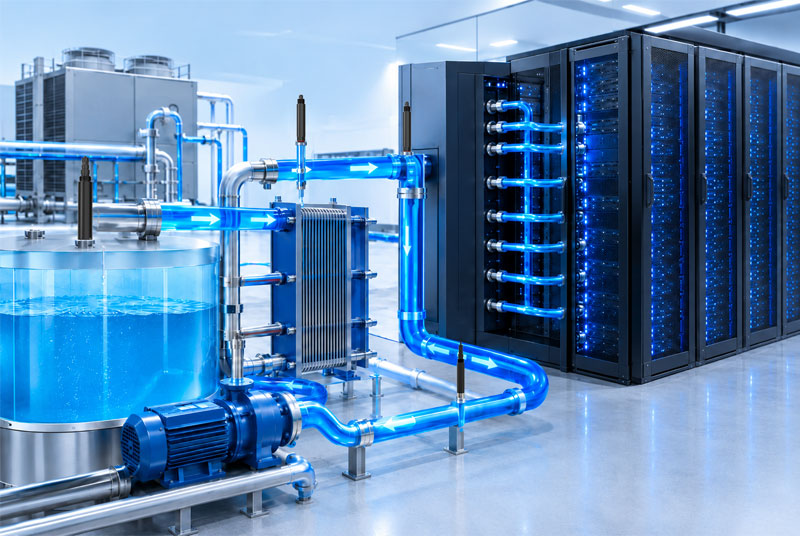
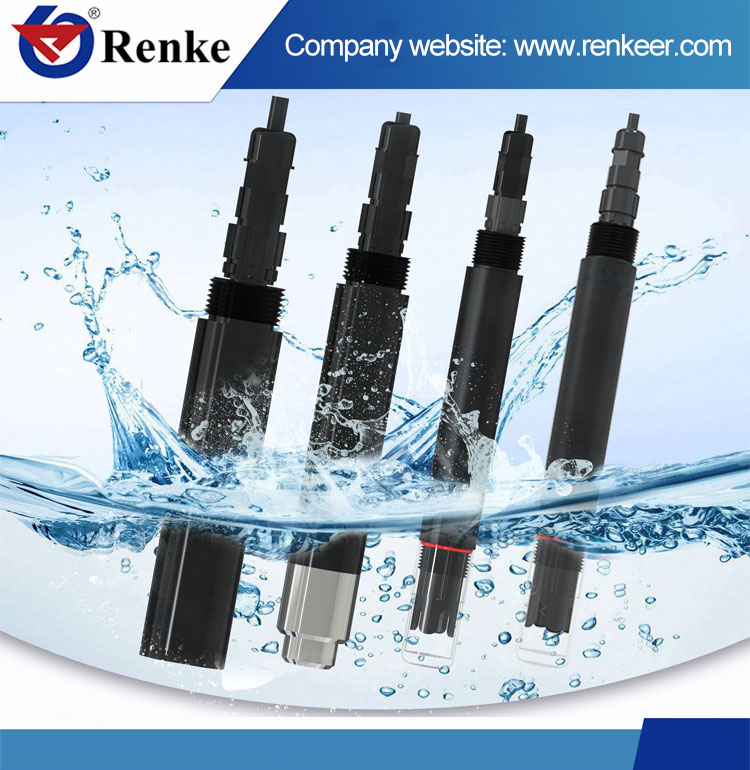
Renkeer water quality sensors deliver continuous monitoring of key coolant parameters in AI data centers, assisting operators in identifying fluid abnormalities and maintaining system efficiency.
JINAN, China - BostonChron -- As artificial intelligence workloads increase thermal demands on data centers, liquid cooling is becoming an important approach to managing heat generated by high-performance computing equipment. Renkeer, a provider of water quality monitoring solutions, supports this trend by supplying water quality sensors that help maintain the efficient operation of AI liquid cooling systems.
Coolant loops in AI data centers typically include narrow microchannel cold plates, pumps, manifolds, fittings and heat exchangers made from several different metals. Even small shifts in water quality can cause problems in this environment. Rising conductivity may signal ion contamination or coolant degradation, which increases corrosion and leakage risk. A drifting pH value can accelerate metal attack or point to depleted inhibitors. Dissolved oxygen promotes corrosion in copper and steel parts. Suspended particles can clog microchannels and reduce flow. Because a single cooling failure can idle expensive GPU clusters, continuous measurement is more dependable than periodic manual sampling.
More on Boston Chron
Renkeer's water quality range includes pH sensors, conductivity sensors, dissolved oxygen sensors, turbidity sensors and ORP sensors. Together they measure acidity, ionic content, oxygen level, particle load and oxidation-reduction potential, the main indicators used to judge the condition of process water and coolant. The sensors are built for continuous online use and can be connected to industrial controllers and IoT monitoring platforms.
Continuous readings allow operators to set alarm thresholds, follow trends over time and schedule maintenance such as filter changes, coolant top-ups and system flushes based on actual condition instead of fixed intervals. This reduces manual sampling work, shortens response time when water quality drifts and supports longer service life for pumps, heat exchangers and cold plates. Data from several loops, including primary loops, secondary loops and associated chillers and cooling towers, can be gathered on one monitoring platform, giving facility teams a clear view of the whole cooling system.
More on Boston Chron
When deploying water quality monitoring equipment in liquid cooling systems, sensor selection is crucial. Direct chip cooling, immersion cooling, and traditional water cooling loops use different cooling media and have varying material compatibility standards. Operators must verify the sensor contact materials, measurement range, and calibration performance for the target cooling medium and interpret sensor measurements in conjunction with equipment specifications, maintenance records, and other relevant operational data.
Through its water quality monitoring solutions, Renkeer aims to support data-driven management of water-based cooling applications. As data center operators expand infrastructure to meet growing AI computing demands, reliable measurement of relevant coolant parameters can contribute to more informed maintenance decisions, improved visibility into operating conditions, and effective cooling system management.
Coolant loops in AI data centers typically include narrow microchannel cold plates, pumps, manifolds, fittings and heat exchangers made from several different metals. Even small shifts in water quality can cause problems in this environment. Rising conductivity may signal ion contamination or coolant degradation, which increases corrosion and leakage risk. A drifting pH value can accelerate metal attack or point to depleted inhibitors. Dissolved oxygen promotes corrosion in copper and steel parts. Suspended particles can clog microchannels and reduce flow. Because a single cooling failure can idle expensive GPU clusters, continuous measurement is more dependable than periodic manual sampling.
More on Boston Chron
- Provincetown Knitter Darren Showers Publishes Luna's Gift of Yarn
- OncoBeta Introduces Rhenium-SCT for Non-Melanoma Skin Cancer at Theageneio Cancer Hospital of Thessaloniki
- Massachusetts Author Joseph V. Randazzo Releases Debut Suspense Novel Finding Alma
- Brian G. Miller Co., LLC Receives Tier 1 Ranking in the 2027 Edition of Best Law Firms®
- The Villari Firm, PLLC Named to the 2027 Edition of Best Law Firms
Renkeer's water quality range includes pH sensors, conductivity sensors, dissolved oxygen sensors, turbidity sensors and ORP sensors. Together they measure acidity, ionic content, oxygen level, particle load and oxidation-reduction potential, the main indicators used to judge the condition of process water and coolant. The sensors are built for continuous online use and can be connected to industrial controllers and IoT monitoring platforms.
Continuous readings allow operators to set alarm thresholds, follow trends over time and schedule maintenance such as filter changes, coolant top-ups and system flushes based on actual condition instead of fixed intervals. This reduces manual sampling work, shortens response time when water quality drifts and supports longer service life for pumps, heat exchangers and cold plates. Data from several loops, including primary loops, secondary loops and associated chillers and cooling towers, can be gathered on one monitoring platform, giving facility teams a clear view of the whole cooling system.
More on Boston Chron
- Boston: Fire Prevention Week 2026
- Trans Filmmaker Jacob Clayton Screens Comedy Short at LAVA Film Festival
- Bacchus Wine & Spirits and Michelin Guide–Recommended Ethel's Fancy to Host Exclusive LOUIS XIII Limited Edition Diwali Decanter Celebration
- Boston: October Mayor's Office of Housing Newsletter
- Arizona Pest Control Surpasses $200,000 in Contributions to Southern Arizona High School Sports and Education Programs
When deploying water quality monitoring equipment in liquid cooling systems, sensor selection is crucial. Direct chip cooling, immersion cooling, and traditional water cooling loops use different cooling media and have varying material compatibility standards. Operators must verify the sensor contact materials, measurement range, and calibration performance for the target cooling medium and interpret sensor measurements in conjunction with equipment specifications, maintenance records, and other relevant operational data.
Through its water quality monitoring solutions, Renkeer aims to support data-driven management of water-based cooling applications. As data center operators expand infrastructure to meet growing AI computing demands, reliable measurement of relevant coolant parameters can contribute to more informed maintenance decisions, improved visibility into operating conditions, and effective cooling system management.
Source: Shandong Renke Control Technology Co., Ltd.
0 Comments
Latest on Boston Chron
- Club Wyndham Research Identifies the "Holiday Rewind Effect": 93% of Parents Recreate Their Own Childhood Holidays for Their Kids
- IEI Rugged IP66 Panel PC Brings Real-Time Visibility to Heavy-Duty Mining Fleets
- FDA Approval; Major Milestone for Preservative-Free Ketamine Ahead of FDA Goal Date for Treatment of Suicidal Depression by NRx Pharmaceuticals, Inc
- Building a Technology Powerhouse-From AI Drones and Global Acquisitions to Defense, Enterprise Software and the Future of Autonomous Operations $ZENA
- Shelter Structures America backs MATRA Second Life Project to turn retired tent vinyl into homes for displaced families
- P-Wave Press Announces Becoming Dad: Reflections for New Fathers by L. A. Davenport
- Logicraft Launches FuelDeck™, AI That Turns Aviation Fuel Tickets Into One Traceable Ledger
- Inaugural OC Tech Week Draws 3,000 From 12 Countries, Sends Finalist to $1M Startup World Cup
- Boston: Proposed Demolition (Article 85, Demo Delay) 226-228 Chestnut Avenue, Jamaica Plain
- Boston: Affordable Housing Opportunity: 56 Glenway Street and 142, 154 Erie Street
- Award-Winning American Hotelier Opens Art-Filled Luxury Cottage in Norfolk, England
- LotusOpen Opens Early-Interest List as Independent Social Platform Takes Shape
- K2 Global / Ozi Amanat Named Among Top 100 AI Venture Capitalists in 2026
- Dr. Latorial Faison Appointed Poet Laureate of Virginia
- City of Boston Shares Final Voting Reminders in Preparation for the November 3 State Election
- Boston: Ready to Vote? Here's How to Cast Your 3 Ballot Cards
- AdLeverage Brings Golf Simulator Contest and Home Services Marketing Expertise to Service World Expo 2026
- Cleveland Factory Worker Seeks Funding for AI-Readable Archive Exploring Advanced AI Restraint and Human Survival
- Kathleen Goneau Named 2026 MetroWest Community's Choice Award Winner for Real Estate Agent
- TradeJARnal Launches Innovative Trading Journal to Help Stock and Options Traders Build Discipline and Smarter Trading Habits